
Soft & Fluffy Tangzhong Dinner Rolls
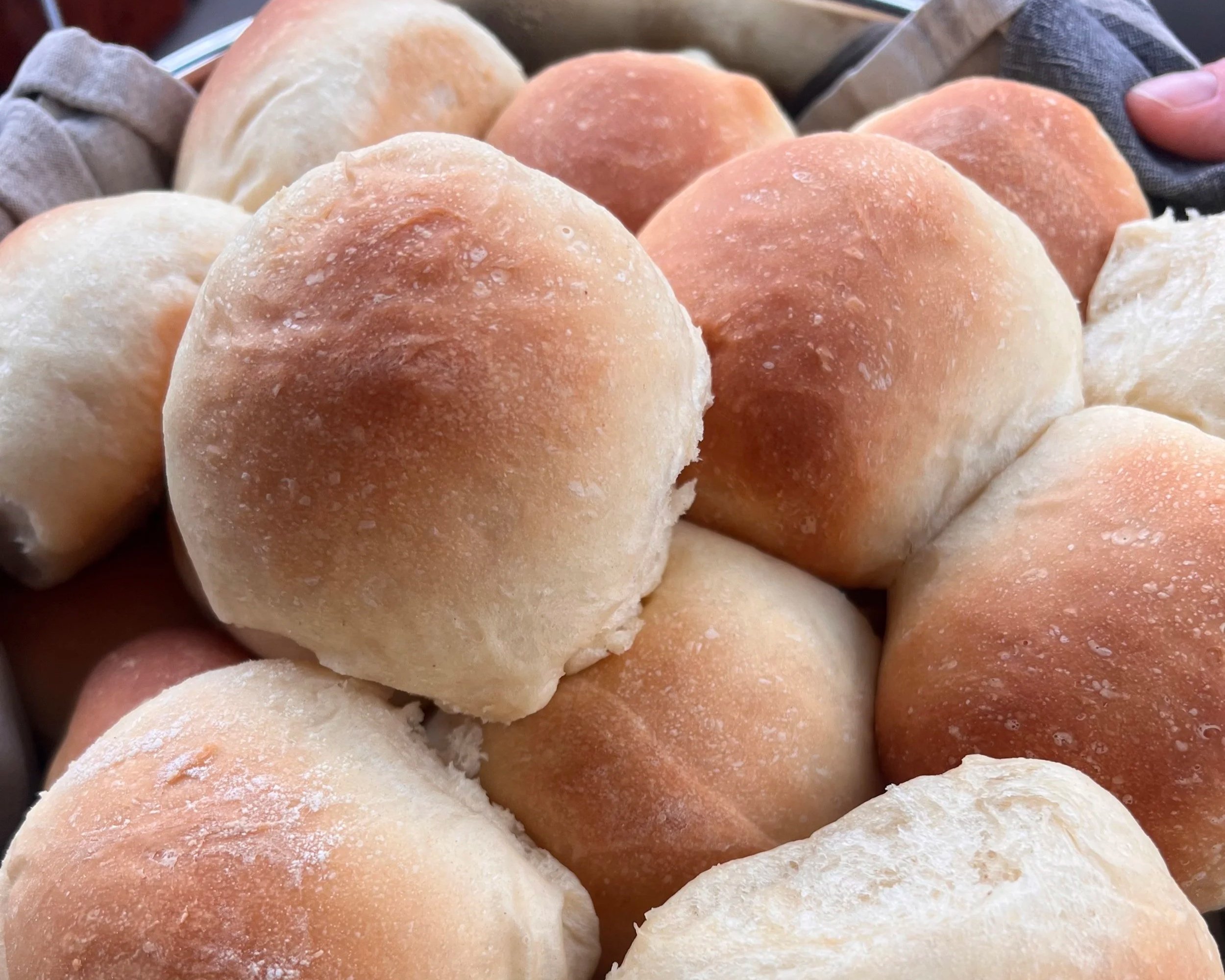
Yeast-based • extra tender • bakery-style
If you’ve ever wondered how bakeries get dinner rolls that stay impossibly soft for days — this is the secret.
These Tangzhong dinner rolls are cloud-like, stretchy, and tender, with a pillowy crumb that feels luxurious but is surprisingly simple to achieve at home. They’re made with pantry staples and flexible ingredients, so they work beautifully whether you bake with dairy or prefer plant-based options.
What Is Tangzhong? (And Why It Works)
Tangzhong is a classic Asian baking technique, most often associated with Japanese milk bread. The method involves cooking a small portion of flour with liquid into a thick paste before adding it to the dough. Why this matters: cooking the flour pre-gelatinizes the starches, those starches can absorb more liquid, the dough holds onto moisture longer; and the result is a softer bread, finer crumb, better rise, and longer freshness.
In simple terms: tangzhong lets you add more hydration without making the dough sticky or dense. That’s why these rolls feel feather-light and stay soft even the next day.
This technique works with dairy or non-dairy milk, making it incredibly versatile.
Tangzhong Dinner Rolls
Makes 12 large or 15–18 medium rolls
Ingredients
Tangzhong (the magic paste)
3 Tbsp (25g) all-purpose flour
½ cup (120g) milk of choice (soy milk works beautifully)
Dough
1 cup (240g) warm milk of choice (about 105–110°F)
¼ cup (55g) dairy-free butter, regular butter, or 3 Tbsp (40g) olive oil
3 Tbsp (38g) sugar (organic cane or maple sugar)
1 tsp fine sea salt
2¼ tsp instant or rapid-rise yeast (1 packet)
3–3½ cups (360–420g) all-purpose flour
Optional but excellent: 1 tsp apple cider vinegar (strengthens structure + improves rise, especially without eggs)
For brushing
Melted butter or olive oil
Optional finish: flaky salt, herbs, or a maple-butter gloss
⸻
Step-by-Step Instructions
Make the Tangzhong: In a small saucepan whisk together 3 Tbsp flour and ½ cup milk, cook over medium-low heat, whisking constantly, in 1–3 minutes, it will thicken into a smooth, glossy paste (similar to pudding). Remove from heat and let cool 5–10 minutes. This is your moisture-locking foundation.
Warm the liquid base: In a bowl or saucepan, combine 1 cup milk, butter or olive oil, sugar, salt, apple cider vinegar (if using). Warm gently to about 105–110°F — warm but not hot.
Add the yeast: Sprinkle the yeast over the warm mixture. Let sit 2–3 minutes. Instant yeast doesn’t require proofing, but this step encourages a stronger rise and fluffier texture.
Combine with Tangzhong: Stir the warm milk mixture into the cooled tangzhong paste until smooth. It may look slightly lumpy at first — that’s normal. Everything will fully incorporate during kneading.
Add flour & knead: Add 3 cups flour to a large bowl or stand mixer. Pour the tangzhong mixture over the flour.
Knead:
Stand mixer: 6–8 minutes
By hand: 10–12 minutes
You’re looking for dough that is soft, slightly tacky, very smooth, stretchy (think mozzarella, not stiff bread dough)
Add extra flour 1 Tbsp at a time only if needed. Tangzhong dough prefers to stay soft — that’s the secret to the texture.
First rise (45–60 minutes): Place dough in an oiled bowl, cover, and let rise until doubled. Warm kitchens rise faster; cooler kitchens may take closer to an hour.
Shape the rolls: Gently punch down the dough and divide into:
12 large rolls (3×4 layout in a 9×13 pan), or
15–18 medium rolls
Roll into tight balls and place in a greased pan for a bakery-style finish.
Second rise (20–35 minutes): Let the rolls rise until they’re very puffy, nearly touching, and are soft and billowy. Avoid over-rising — they should feel airy but still resilient.
Bake: Preheat oven to 350°F. Bake for 18–22 minutes, until the tops are light golden, the internal temperature is ~185–190°F, rolls sound slightly hollow when tapped.
Brush immediately: while hot, brush generously with melted butter, olive oil, or a light maple-butter glaze. This keeps the crust tender and adds that irresistible bakery sheen.
⸻
Helpful Notes & Variations
Milk options: Soy milk provides excellent structure, but oat or dairy milk also work well
Fat swaps: Olive oil gives a slightly more rustic flavor; butter adds richness
Make ahead: These rolls reheat beautifully and stay soft into day two
Freezing: Freeze baked rolls once cooled; rewarm gently wrapped in foil