
Herbal Syrups: Sweet Medicine for Every Season
Ancient Roots, Everyday Comfort
Herbal syrups are one of the most beloved, nostalgic, and approachable ways to welcome plant medicine into the home. Sweet, soothing, and deeply comforting, they bridge the gap between remedy and nourishment — the kind of preparation that feels like a treat, yet carries generations of old-world wisdom. Even children instinctively love syrups, which says something about their gentleness and ease.
This tradition reaches back farther than most people realize. In ancient Egypt, healers combined herbs with honey to create medicinal preparations offered both to patients and to their gods. Honey wasn’t simply a sweetener; it was valued for its preserving qualities and its symbolic connection to life and rebirth. Later, Greek physicians such as Dioscorides carefully recorded honey-based herbal formulas that calmed coughs, eased digestion, and supported general wellness. In Traditional Chinese Medicine, honey has long been used as a harmonizer — a substance that balances and softens the actions of pungent, bitter, or warming herbs.
By the Middle Ages, apothecaries across Europe regularly crafted syrups using honey, sugar, or even wine as the preservative base. These syrups were shelf-stable, pleasant to take, and far more enduring than simple infusions or teas. What began as practical preservation slowly evolved into a tradition of comfort: sweet medicine kept close at hand for sore throats, winter illnesses, digestive troubles, and everyday complaints.
Today, syrups remain one of the easiest ways to bring herbs into daily life — and one of the most beloved preparations in my own apothecary.
What Is an Herbal Syrup?
At its core, an herbal syrup is simply a strong herbal tea (either a decoction or an infusion) that’s combined with a sweetener to create a thick, flavorful, and gently preserved remedy.
A syrup typically includes:
• A strong herbal base — made from simmering roots, berries, and barks, or steeping leaves and flowers.
• A sweetener — traditionally honey or sugar, which preserves the liquid and enhances its flavor.
When combined, these two elements create a preparation that’s both medicinal and delicious — a spoonable remedy that keeps well for weeks or even months depending on storage and ingredients.
Why Syrups Work
Herbal syrups aren’t just tasty; there’s true physiology behind their effectiveness. A few reasons they’ve stood the test of time:
Soothing: Honey’s natural viscosity coats the throat, easing irritation and calming coughs.
Preserving: Sugar and honey extend the life of herbal decoctions, which would otherwise spoil within hours.
Harmonizing: In herbal energetics, sweet flavor is grounding, nourishing, and balancing. It helps soften the intensity of warming or bitter herbs.
Kid-Friendly: The flavor makes them one of the easiest remedies for children to take — no coaxing required.
Everyday Uses for Syrups
Syrups are endlessly adaptable and can be crafted for just about any season or need. A few traditional uses include:
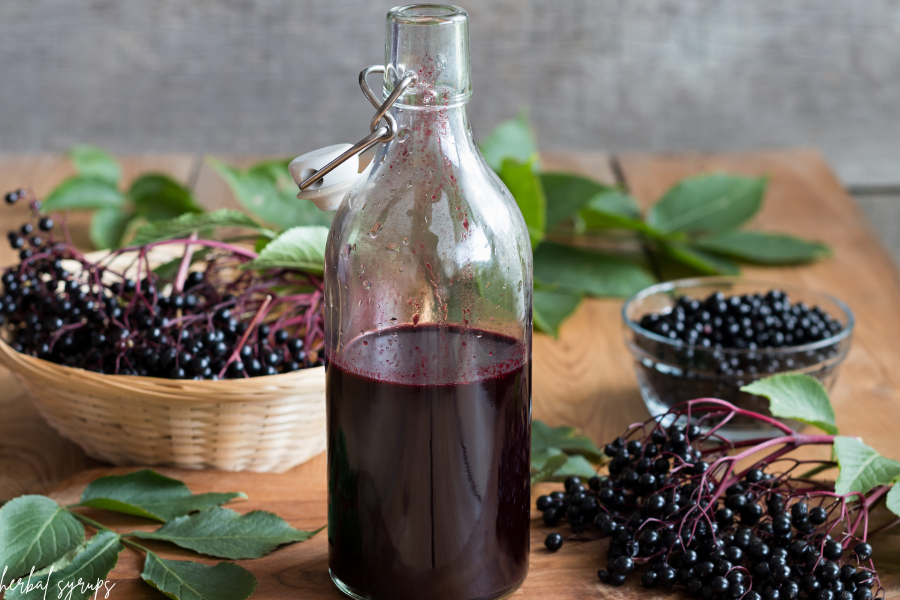
Cold & Flu Season: Elderberry syrup remains the most famous, offering immune support and gentle symptom relief.
Coughs & Throat Support: Ginger, marshmallow root, licorice, and thyme are classic soothing herbs for dry or irritated coughs.
Digestive Comfort: Fennel, peppermint, and chamomile syrups help settle the stomach and ease tension.
Heart & Circulation: Hawthorn berry syrup has a long history as a supportive tonic for the cardiovascular system.
Syrups can be taken by the spoonful, drizzled into tea, served over pancakes, stirred into sparkling water, or even used in cocktails. They’re versatile, delicious, and incredibly easy to integrate into daily rhythms.
How Syrups Are Made
Though every herbalist has their own approach, the traditional process is beautifully simple:
Make a strong decoction or infusion: roots, berries, and barks are simmered for 20–30 minutes, while leaves and flowers are steeped in hot water.
Strain the herbs and return the liquid to the pot.
Add your sweetener: a common ratio is 1 part herbal liquid : 1 part honey or sugar, though this can be adjusted for taste or preservation.
Bottle and store: refrigerated syrups typically last 1–3 months. Honey-based syrups often keep longer than those made with sugar.
Note: Some herbalists add a splash of alcohol (like brandy) to increase shelf life, creating a hybrid tincture-syrup that can be stored even longer.
Seasonal Recipe: Thyme & Honey Cough Syrup
As we move into the colder months — when sniffles, scratchy throats, and lingering coughs tend to make their rounds — one of the easiest syrups to keep on hand is a simple Thyme & Honey Cough Syrup. This is an old-world classic used across Europe for centuries, especially in France and Germany, where thyme has long been celebrated for its ability to calm spasmodic coughs and support the respiratory system.
Thyme is rich in thymol and carvacrol, two compounds known for their antimicrobial and cough-soothing qualities. Paired with raw honey’s natural ability to coat the throat and ease irritation, this syrup becomes both comforting and deeply supportive. It’s gentle enough for children over one year old, tasty enough that even hesitant adults will take it, and effective enough to earn a permanent spot in your winter apothecary.
Below is a simple version that you can make in under 30 minutes.
Thyme & Honey Cough Syrup (Kid-Friendly)
Ingredients
1 cup water
¼–½ cup dried thyme (or a generous handful fresh)
1 cup raw, local honey
Instructions
Bring the water to a gentle simmer and add the thyme.
Cover and simmer for 20 minutes.
Strain, pressing the herbs well to extract the liquid.
Allow the decoction to cool until just warm (hot liquid will destroy enzymes in raw honey).
Stir in the honey and mix until fully combined.
Bottle and refrigerate. Keeps for 2–3 months.
How to Use
Adults: 1–2 teaspoons as needed
Children 1+: ½–1 teaspoon as needed
Can also be stirred into warm (not hot) tea, drizzled onto toast, or taken by the spoonful before bed.
Note: If you want to extend the shelf life even further, you can add 1–2 tablespoons of brandy to the finished syrup.
Optional Enhancements: Customizing Your Syrup
One of the things I love about herbal syrups is how easy they are to personalize. Once you understand the basic method, you can tailor a syrup to your exact needs — whether you want deeper immune support, extra soothing power, or a more complex flavor. Here are a few beautiful additions that pair well with thyme:
Marshmallow Root (Althaea officinalis): Adds rich, mucilaginous soothing for dry, scratchy, or irritated throats. Perfect for those “can’t stop coughing at night” moments.
How to use: Add 1–2 tablespoons to the simmer and strain well.
Lemon Peel: Brightens the flavor, adds vitamin C–rich support, and offers gentle immune benefits.
How to use: Add a strip or two of fresh peel during the simmer.
Ginger Root: Warming, stimulating, and helpful for chest tightness or chills. Adds a cozy, spicy note.
How to use: Add 1–2 tablespoons of fresh sliced ginger and simmer alongside the thyme.
Cinnamon Chips: Enhances antimicrobial actions, improves flavor, and brings a comforting sweetness.
How to use: Add ½–1 teaspoon of cinnamon chips during the simmer.
Licorice Root (Glycyrrhiza glabra): Wonderful for soothing spasmodic coughs, reducing inflammation, and balancing formulas.
Note: Avoid licorice root for anyone with high blood pressure or pregnancy unless guided by a practitioner.
How to use: Add 1–2 teaspoons to the thyme decoction.
Orange Peel: Adds a soft citrus sweetness and rounds out the syrup beautifully.
How to use: Add a few strips of peel during the simmer.
A Splash of Brandy: Not for flavor but for preservation. Alcohol extends shelf life and creates a hybrid tincture-syrup.
• How to use: Add 1–2 tablespoons to the finished, cooled syrup.
How to Build Your Own Blend
For a deeper, winter-focused syrup, you can combine a few of the herbs above. A cozy cold-season blend could look like:
Thyme
Ginger
Lemon peel
Marshmallow root
Or a warming, aromatic blend might include:
Thyme
Cinnamon
Orange peel
Syrups are endlessly flexible and forgiving — the perfect place to experiment and learn how herbs work together in real time.
A Tradition of Sweet Preservation
Syrups became popular in history for one simple reason: they lasted. Before refrigeration, herbal teas spoiled within hours, and fresh plants were often seasonal or difficult to store. By simmering herbs into a concentrated tea and preserving that liquid with honey or sugar, people created remedies that could be kept on the shelf and used as needed throughout the year.
But preservation was only half the story. The sweetness also helped disguise the bitterness and intensity of many medicinal herbs. It turned strong, earthy roots into something almost treat-like — a medicine that felt like comfort instead of obligation.
That same truth holds today. Syrups are approachable for children, for adults who aren’t accustomed to bitter herbal flavors, and for anyone who appreciates a little sweetness alongside their healing.
Syrups in My Apothecary
In my own work, syrups have naturally become seasonal staples — especially during fall and winter. My Elderberry Syrup Kits are one of the simplest ways to bring this old-world tradition into your own kitchen. Everything is portioned and ready for you: simmer the herbs, strain, sweeten, and enjoy.
I love syrups because they’re hands-on. They invite you into the rhythm of herbalism: stirring a pot on the stove, smelling the deep aroma of berries or roots, watching the liquid thicken, and tasting that first warm spoonful. It’s herbal medicine at its most accessible — folk tradition made simple, nourishing, and beautiful.
From ancient Egypt to the home kitchens of medieval Europe, and now to your own modern homestead, herbal syrups have carried the wisdom of plants in a form that is both practical and deeply comforting. They remind us that medicine doesn’t have to be harsh or complicated. Sometimes it really can be as simple as a spoonful of sweetness.
Ready to try it for yourself? Explore my Elderberry Syrup Kits and start your own syrup-making tradition at home.
⸻
References
• Dioscorides, De Materia Medica (1st century).
• Egyptian papyri describing honey-based remedies, including the Ebers Papyrus (c. 1550 BCE).
• Traditional Chinese Medicine texts referencing honey as a harmonizer (e.g., Shennong Ben Cao Jing).
• European apothecary records, 12th–17th centuries, documenting syrup-making as common practice.