
Poultices & Plasters: Ancient Herbal Remedies for Direct Healing
Medicine from Hand to Skin
Long before capsules, standardized extracts, or neatly bottled tinctures lined apothecary shelves, healing often began with something much simpler: a crushed leaf, a warm mash of herbs, a paste pressed gently against wounded skin.
Poultices and plasters are among the oldest recorded forms of herbal medicine. They represent medicine in its most direct form — plant to skin, hand to body, need met with what is available.
Across cultures and centuries, this method of healing appears again and again.
Ancient Egyptian medical papyri describe bread, clay, honey, and herbs applied to wounds to prevent infection and speed healing. Greek physicians such as Hippocrates and later Galen prescribed poultices for inflammation, abscesses, and traumatic injuries. In Traditional Chinese Medicine and Ayurveda, topical herbal pastes remain foundational therapies for swelling, stagnation, and localized pain.
Even in Scripture, we see this practice recorded plainly and without mysticism. In Isaiah 38:21, during King Hezekiah’s illness, “a lump of figs” was laid upon a boil, and he recovered. The text does not frame this as magic or ritual — but as practical care. The people of that time understood that plants, applied directly, could assist the body in healing.
From battlefields to farm fields, kitchens to wilderness trails, poultices and plasters have been a first line of care when something urgent happens.
They are simple. They are earthy. And they are profoundly effective when used wisely.
What Is a Poultice?
A poultice is a soft, moist mass of plant material applied directly to the skin to address injury, irritation, or infection.
Traditionally, herbs are:
Crushed, mashed, or bruised fresh
Or powdered and rehydrated if dried
Mixed with water, oil, vinegar, or honey
Applied warm or cool
Secured in place with cloth
The goal is direct contact between plant constituents and the affected tissue. Poultices are typically moist and pliable. They may be warm to stimulate circulation or cool to reduce inflammation, depending on the situation. At its core, a poultice is localized herbal therapy.
What Is a Plaster?
A plaster is similar but generally thicker, firmer, and more structured.
Plasters often include:
Flour
Clay
Charcoal
Mustard powder
Resins
These ingredients create a paste that adheres more firmly to the skin and may dry slightly as it sits. Historically, plasters were frequently used for drawing out infection, pulling splinters, reducing venom spread, and stimulating circulation in stagnant tissue.
The term “drawing salve” in later herbal tradition developed from this same principle — though modern commercial products often differ significantly from traditional herbal plasters.
Why Poultices and Plasters Work
There is nothing mystical about their effectiveness. Their benefits can be understood physiologically.
Direct Application
When applied to the skin, active plant compounds interact with tissue locally. The skin is not impermeable. While it is a barrier, it allows certain compounds — particularly volatile oils and small phytochemicals — to penetrate superficially and influence local tissue.Topical application:
• Delivers plant chemistry directly to inflamed or injured areas
• Avoids digestive breakdown
• Focuses action where needed
Heat and Moisture
Warm poultices:• Increase local circulation
• Soften tissue
• Encourage immune cell activity
• Help abscesses come to a head
Cool poultices:
• Soothe irritation
• Reduce swelling
• Calm inflamed skin
Moisture keeps tissue pliable and prevents cracking or dryness that can delay healing.
The “Drawing” Effect
Certain materials genuinely assist in pulling fluid and impurities outward.• Clay adsorbs toxins and inflammatory compounds.
• Activated charcoal binds toxins.
• Plantain supports lymphatic movement in superficial tissue.
• Mustard stimulates circulation, helping stagnant fluid move.
“Drawing” does not mean extracting mysterious substances — it refers to osmotic action, adsorption, and improved circulation that help the body move waste outward.
Protective Barrier
A poultice acts as a temporary protective layer. It shields tissue from air exposure while keeping wounds moist (which supports healing), preventing contamination, and allowing herbs to remain in place long enough to act.Modern wound care science confirms that moist environments heal faster than dry ones. Traditional poultices intuitively understood this.
Traditional Herbs for Poultices & Plasters
Let’s look at some of the most historically documented and physiologically supported herbs used in poulticing.
Plantain (Plantago major / Plantago lanceolata)
Often called “nature’s bandage.” Traditionally used for bee stings, splinters, minor cuts, insect bites, and mild venom exposure.
Why it works:
Contains allantoin (supports tissue repair)
Anti-inflammatory compounds
Mild antimicrobial properties
Supports lymphatic drainage
A fresh leaf, crushed and applied immediately, is one of the simplest and most effective field remedies available.
Comfrey (Symphytum officinale)
Historically known as “knitbone.” It’s used for bruises, sprains, minor fractures (external use only), and tissue damage.
Why it works:
Rich in allantoin
Supports cell proliferation
Encourages connective tissue repair
⚠ Important: Comfrey should only be used externally and not on deep puncture wounds due to rapid skin closure over infection risk.
Mustard Seed (Brassica spp.)
Used for chest congestion, stiff joints, and poor circulation. Mustard plasters increase blood flow to an area, creating warmth and stimulating immune response.
⚠ Mustard can burn the skin. Always mix with flour and monitor carefully.
Garlic & Onion
Used historically for infections, chest congestion, and abscesses. Garlic contains allicin, a potent antimicrobial compound. Onion contains sulfur compounds with similar benefits.
⚠ These are strong and may irritate skin. Always dilute and limit contact time.
Activated Charcoal & Bentonite Clay
Used for bites, stings, poison ivy, and localized infections. These substances bind toxins and inflammatory compounds. They do not “suck out poison” magically, but they reduce inflammatory load at the surface.
Cabbage Leaves (Brassica oleracea)
A long-standing remedy for mastitis, breast engorgement, joint swelling, and inflammation. Cabbage contains glucosinolates and anti-inflammatory compounds. The cooling, moist leaf itself provides relief.
Figs (Isaiah 38:21)
The fig poultice applied to Hezekiah’s boil is historically significant. Figs contain natural sugars, enzymes, and soothing compounds. Applied as a moist mass, they may soften hardened tissue and assist immune response.
Scripture records this without embellishment — reinforcing that herbal application was ordinary, not occult.
How to Make a Simple Poultice
Basic Fresh Herb Poultice
Best for: bites, stings, minor inflammation
Harvest fresh leaves.
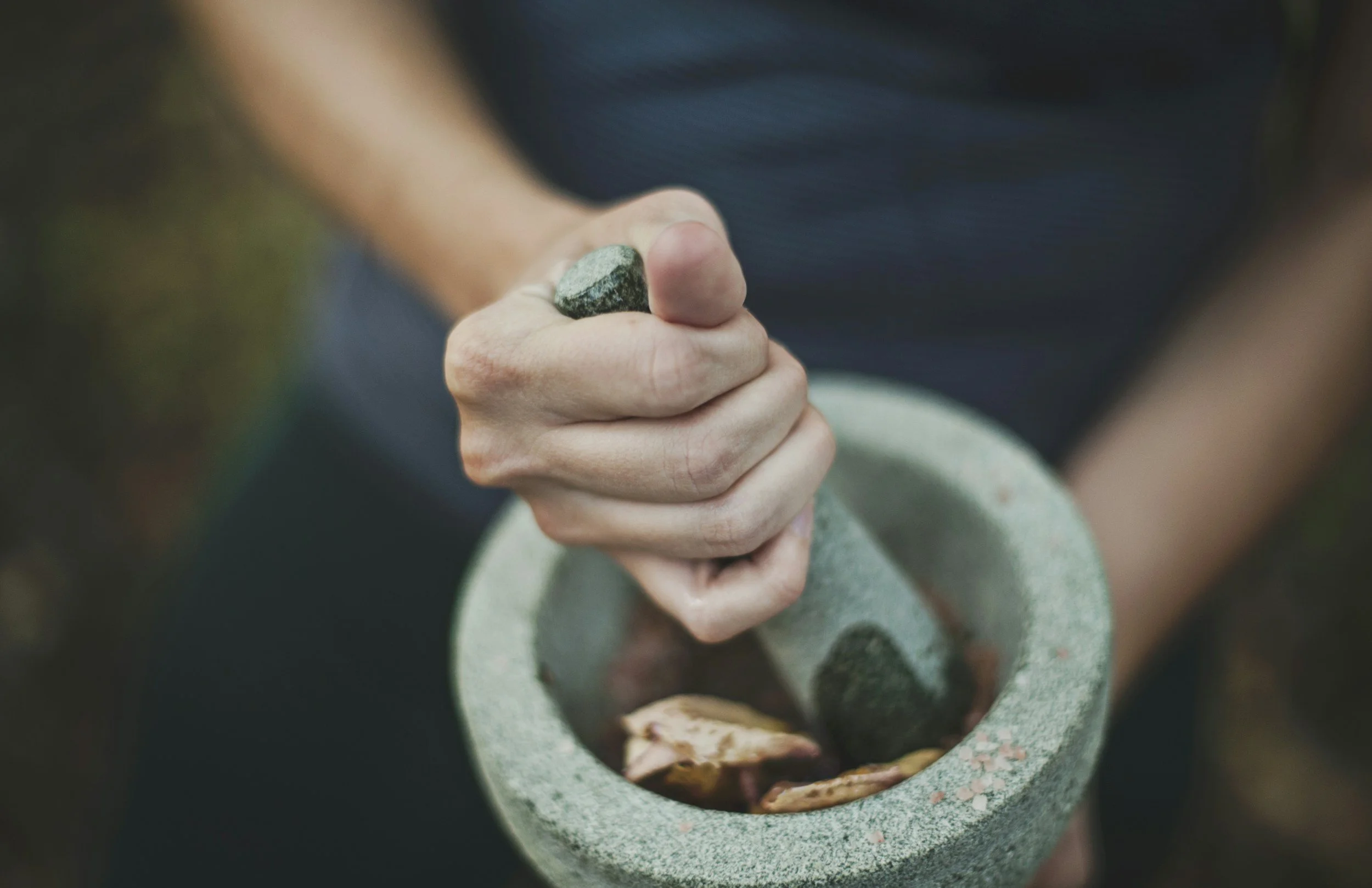
Crush or mash thoroughly (a mortar and pestle works well).
Apply directly to skin or place in thin cloth.
Secure gently.
Replace every 30–60 minutes as needed.
Dried Herb Poultice
Powder dried herb.
Add hot water to form thick paste.
Allow to cool slightly.
Spread on cloth.
Apply warm (not hot) to area.
Charcoal Drawing Plaster
For bites or localized irritation
1 tablespoon activated charcoal
1 teaspoon bentonite clay
Enough water to form paste
Apply thickly. Cover loosely. Leave 30–90 minutes.
Mustard Chest Plaster (Mild Version)
1 part mustard powder
3–4 parts flour
Warm water to paste
Spread between two cloth layers. Apply 5–15 minutes only. Remove immediately if burning becomes uncomfortable.
Cabbage Leaf Poultice
Remove thick center rib.
Gently bruise leaf.
Apply cool to area.
Replace every 1–2 hours.
Simple. Effective. Accessible.
Safety Considerations
Herbal wisdom must be paired with discernment. Do not use poultices on deep puncture wounds, severe infections requiring medical care, serious burns, venomous bites without seeking emergency care.
Always monitor skin for irritation.
Herbal medicine supports the body — it does not replace appropriate medical intervention when necessary.
Herbalism Within a Biblical Framework
It is important to say plainly: the use of plants for healing is not pagan, mystical, or occult when practiced within a Biblical worldview. Genesis describes plants given for food and provision. Ezekiel 47:12 says, “Their fruit will be for food, and their leaves for medicine.” The power is not in ritual or energy. It is in the Creator’s design. Poultices are simply stewardship — using what God has made, with wisdom and humility.
Folk Medicine at Its Purest
There is something grounding about crushing a leaf in your hand and applying it directly. It removes layers of abstraction. No branding. No complicated formulations. No spiritual theatrics. Just plant. Skin. Care. In a culture that often assumes healing must be expensive or complicated, poultices remind us that sometimes it begins with paying attention to what is growing under our feet.
Final Thoughts
Poultices and plasters connect us to the earliest forms of practical healing. They are direct, localized, evidence-supported, historically rooted, and Biblically compatible. They require knowledge — not mysticism. The next time you’re bitten, bruised, inflamed, or dealing with minor irritation, consider starting simply.
Crush a leaf. Make a paste. Apply it with care.
Sometimes the oldest methods endure because they work.