
How to Choose Skincare That Works With Your Skin, Not Against It
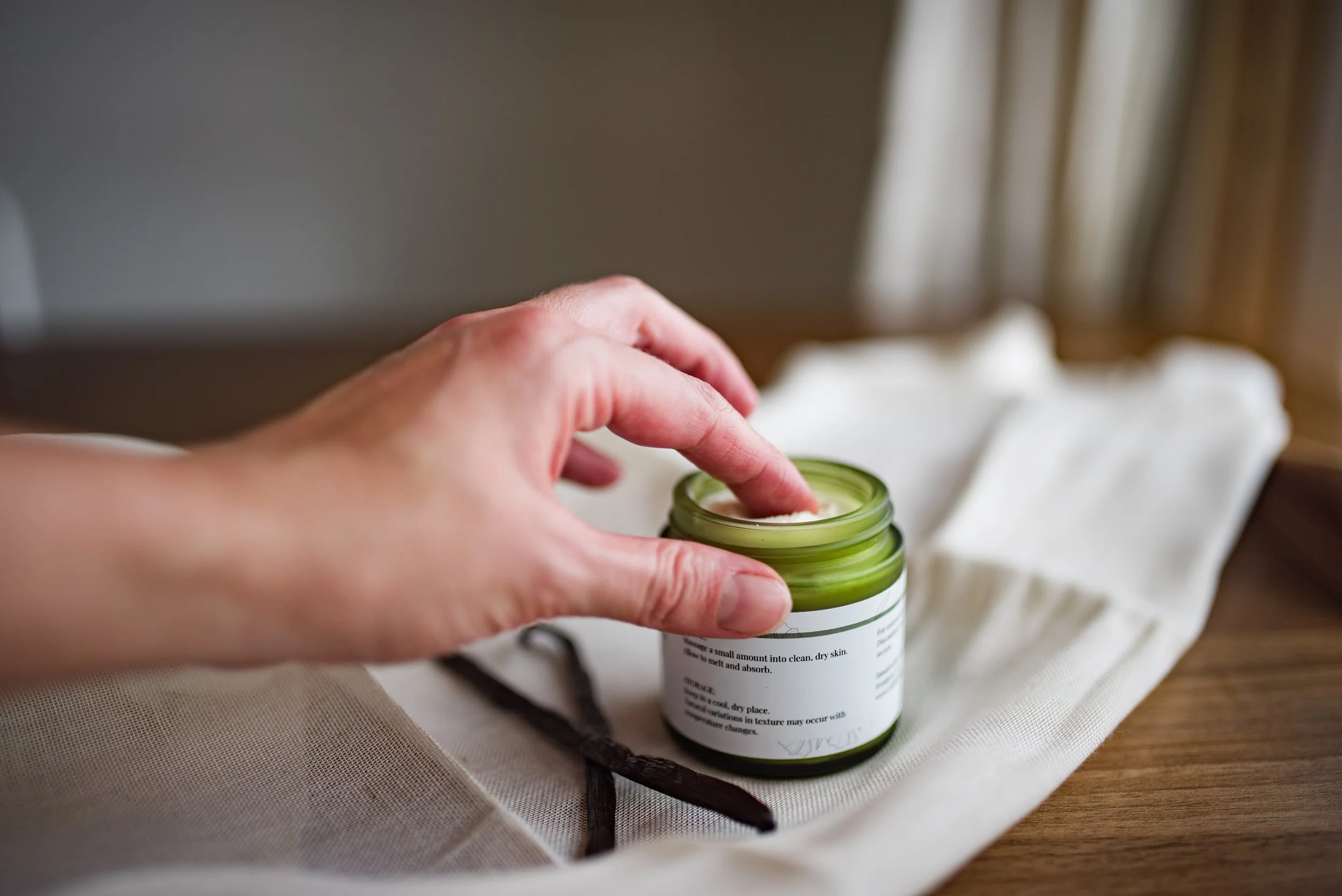
A guide to discernment, restraint, and long-term skin health
For many people, skincare feels like a constant cycle of hope and disappointment.
A new product promises clarity, glow, balance, or repair. At first, it seems to work. Skin looks brighter, smoother, more alive. But weeks or months later, irritation creeps in. Sensitivity increases. Products that once felt supportive suddenly feel like too much. This pattern is so common it has been normalized. Skin is said to be “purging,” “adjusting,” or “getting used to actives.” The solution is usually more products, more steps, or stronger formulations.
But what if the problem is not your skin? What if it’s the direction your skincare is taking it?
Your skin is not a problem to be fixed
Skin is a living organ. It breathes, communicates, protects, and repairs. Its primary role is not cosmetic perfection, but function — acting as a barrier that keeps what belongs inside protected and what does not belong, outside.
When skin struggles, it is rarely because it’s lazy or deficient. More often, it’s overwhelmed.
Modern skincare tends to treat skin as something to manage, correct, or control. Traditional systems of medicine viewed skin as something to support. That difference in perspective changes everything.
Activation versus healing
One of the most important — and least discussed — distinctions in skincare is the difference between activation and healing.
Activation creates visible change quickly. Healing builds resilience over time.
Many modern products rely heavily on activation: strong exfoliants, frequent acid use, highly concentrated essential oils, and daily stimulation of circulation and turnover. Activation is not inherently harmful. In short bursts, it can be useful. But when activation becomes the foundation of daily care, the skin never has the opportunity to rest, rebuild, or stabilize.
Healing, by contrast, is often subtle. It produces fewer sensations, less dramatic “before and after” moments, slower progress, and greater consistency. Over time, healing leads to skin that is calmer, stronger, and less reactive — even under stress.
Why overstimulation often masquerades as effectiveness
Tingling, warming, tightening, or flushing are often interpreted as signs that a product is working. In reality, these sensations usually reflect stimulation or irritation rather than repair.
Skin can respond to stimulation with increased circulation, temporary plumping, and short-term brightness. But these effects do not indicate improved barrier health. Chronic stimulation often leads instead to barrier disruption, increased sensitivity, product dependence, and inflammation that appears later.
A product that truly supports the skin does not need to announce itself loudly.
The skin barrier matters more than actives
Healthy skin is not defined by how many actives it can tolerate. It is defined by the integrity of its barrier.
The skin barrier regulates moisture, protects against pathogens, prevents irritation, and communicates with the immune system. When the barrier is compromised, even gentle ingredients can cause reactions. When it is supported, the skin becomes resilient — less reactive to weather, stress, hormones, and environmental exposure.
Skincare that prioritizes barrier health tends to emphasize skin-identical lipids, stable fats, minimal volatility, and fewer competing signals. This is why many people experience relief when they simplify, even if they fear they are “doing less.”
Why daily skincare should feel almost boring
This can be a difficult truth to accept. Effective daily skincare is often predictable, calm, and unsensational. It may not tingle. It may not smell strong. It may not promise transformation in seven days. But over time, it creates skin that holds moisture better, reacts less, recovers faster, and requires fewer interventions.
Exciting skincare has its place — just not as the foundation of daily care.
How to tell if a product is actually helping
Rather than focusing on immediate results, look for patterns over time.
Skin that is being supported tends to feel calmer week to week. Redness gradually decreases. Sensitivity improves rather than escalates. The number of products needed decreases. Recovery from stress becomes faster.
By contrast, signs that a product may be working against the skin include increasing reactivity, persistent burning or tightness, dependence on the product for “good skin days,” and irritation continually explained away as “purging.”
Healing skin becomes less demanding, not more.
Why skin type labels fall short
Labels like oily, dry, combination, or sensitive describe surface behavior, not root cause.
Many people labeled as oily are experiencing dehydration and barrier disruption. Many “dry” skin types are inflamed rather than deficient. Sensitivity often reflects cumulative irritation rather than inherent fragility.
Instead of asking “What is my skin type?” consider asking whether your skin feels inflamed or calm, resilient or fragile, able to recover easily or prone to lingering reactions.
These questions lead to better choices than any label.
Reading ingredient lists without fear
Ingredient lists can feel intimidating, especially with conflicting information online. Discernment does not require perfection.
A few gentle principles can help: fewer ingredients often mean fewer competing signals; daily-use products benefit from stability over intensity; volatile ingredients should be used intentionally rather than habitually; and fragrance — natural or synthetic — should never be the primary function.
Rather than fearing specific ingredients, pay attention to patterns in how your skin responds. Your skin is a better teacher than any list.
Trusting your skin again
Perhaps the most overlooked aspect of skincare is trust. Many people no longer trust their skin to function without constant correction. They fear skipping steps. They fear regression. They fear losing results. But skin remembers how to heal when given the conditions to do so.
Supportive skincare builds trust rather than dependence. It encourages resilience rather than compliance. It honors the body’s design.
When skincare works with the skin rather than against it, routines simplify naturally.
Choosing skincare with wisdom
Choosing skincare is not about finding the “best” product. It is about choosing what aligns with your skin’s current needs. Sometimes that means fewer products, less stimulation, slower results, and greater consistency. Sometimes it means allowing the skin to rest.
Healing is rarely loud. But it is steady.
If you’re looking for new skincare products, feel free to check out our skincare line that leans on ancient traditions here.
Continue the series
This article is part of a four-part series exploring essential oils, resins, and thoughtful skincare formulation:
• Part One: Essential Oils: History, Truth, and Proper Use
• Part Two: Resins: The Medicine We Forgot
• Part Three: Essential Oils, Resins, and Whole-Plant Preparations
• Part Four: How to Choose Skincare That Works With Your Skin, Not Against It