
The History and Tradition of Winter Herbal Tonics
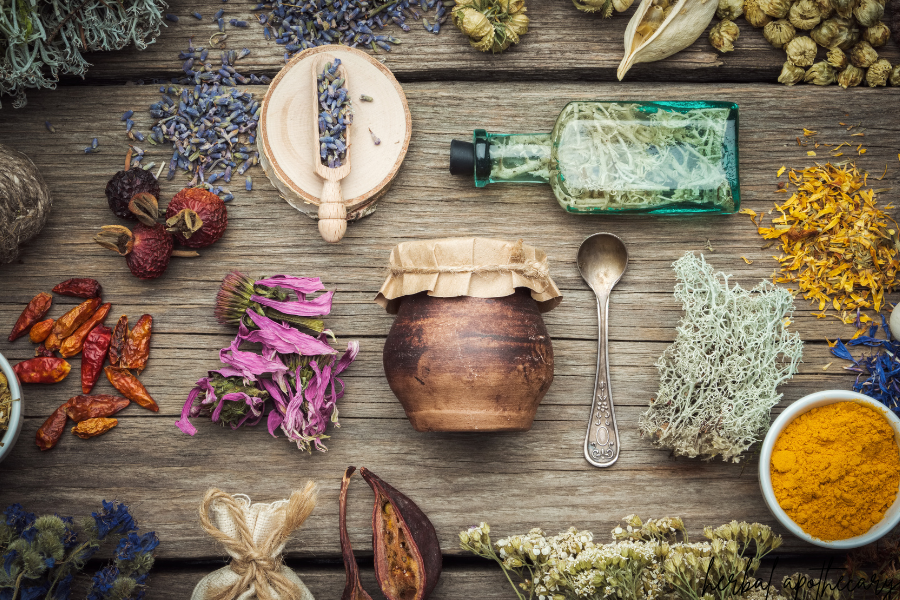
For as long as people have endured long, cold winters, they have turned to herbs to strengthen and sustain them. Before refrigeration, before imported produce, before shelves lined with supplements and cold remedies, families relied on what they could grow, gather, preserve, and pass down. Winter was not a season to “push through,” but a season to prepare for — physically, practically, and rhythmically.
Across cultures and centuries, herbal tonics played a central role in winter survival. These preparations were not viewed as medicine in the modern, emergency-only sense, but as steady companions to daily life. They helped nourish bodies when fresh foods were scarce, supported resilience during cold and illness, and provided warmth and vitality when the land itself was resting.
From spiced vinegars and honeyed syrups to warming teas and cordials, winter tonics were both practical and deeply traditional. They tell a story of continuity — one where care was taken daily, not only when sickness arrived. Today, as interest in herbal remedies resurges, these old preparations offer more than nostalgia. They offer wisdom that still fits the human body remarkably well.
Winter Has Always Held My Heart
What Is a Herbal Tonic?
An herbal tonic is a preparation designed to support overall health, strength, and resilience over time. Unlike remedies taken only in moments of illness, tonics are often used regularly throughout a season. Their purpose is not to “attack” disease, but to gently nourish the body and help it withstand environmental stress.
Historically, tonics were understood as supportive rather than corrective. They worked with the body, not against it — strengthening digestion, circulation, immunity, and vitality during periods when people were more vulnerable to fatigue and infection. In winter especially, when cold weather slowed circulation and limited access to fresh greens, tonics helped fill nutritional gaps and maintain balance.
Most traditional tonics share a few defining characteristics:
They are made from simple, whole ingredients
They are preserved using vinegar, honey, alcohol, or sugar
They are taken consistently in small amounts
They emphasize warming, aromatic, and mineral-rich plants
Rather than being overly complicated, these preparations were intentionally accessible. Many were made in kitchens, not apothecaries, and adapted based on what was available locally.
Vinegars: Preserving the Garden in a Bottle
Herbal vinegars are among the oldest and most widespread tonic preparations. Long before glass bottles lined store shelves, vinegar offered a reliable way to preserve herbs through the winter months. In medieval Europe, apple cider vinegar was commonly infused with garlic, onions, herbs, and spices — especially those considered warming or protective.
Vinegar served several purposes at once. It preserved plant material, extracted minerals and water-soluble constituents, and made otherwise bitter herbs more palatable. These vinegars were taken by the spoonful, diluted in water, or added to food — functioning as both remedy and nourishment.
From a practical standpoint, vinegar was ideal for winter. It required no refrigeration, lasted for months, and could be made with scraps from the garden just before frost. Roots, leaves, peels, and spices that might otherwise be lost were transformed into something useful and sustaining.
Why Herbal Vinegars Work
Vinegar is particularly effective at extracting minerals such as calcium, magnesium, potassium, and iron from plants. This made herbal vinegars especially valuable during winter, when mineral-rich fresh greens were unavailable. Many traditional winter fatigue remedies relied on vinegar extractions for this reason.
Herbal Tea, Infusion, or Decoction? A Deep Dive into Herbal Preparations
Simple Winter Herbal Vinegar Recipe
Ingredients
Fresh or dried herbs such as thyme, rosemary, sage
Garlic cloves and onion slices
Optional additions: chili peppers, ginger, black peppercorns
Raw apple cider vinegar
Method
Fill a glass jar loosely with herbs and aromatics.
Cover completely with apple cider vinegar.
Cap with a non-metal lid or use parchment paper under the lid.
Let infuse for 3–4 weeks, shaking occasionally.
Strain and store in a cool, dark place.
Use this vinegar as a daily tonic (1 teaspoon diluted in water), in salad dressings, or as a flavorful addition to soups and roasted vegetables.
Fire Cider: Folk Tradition Turned Modern Staple
Fire cider is perhaps the most recognizable winter vinegar tonic today. While the name itself is modern — popularized in the late 20th century — the practice behind it is far older. Spicy, pungent vinegar preparations have existed for centuries in folk traditions across Europe and beyond.
These formulas were built around warming roots and bulbs: garlic for circulation and immune support, onions for respiratory health, horseradish for sinus congestion, ginger for warmth and digestion, and hot peppers to stimulate blood flow. Citrus, herbs, and honey were often added when available.
Fire cider reflects a central principle of traditional winter care: warm what the cold constricts. In cold seasons, circulation slows and stagnation becomes more likely. Spicy, aromatic plants were used intentionally to counteract this effect.
Fire cider was rarely consumed as a “shot” in historical contexts. Instead, it was diluted, mixed with honey, or taken in small amounts consistently — reinforcing the idea that tonics work best as habits, not extremes.
Many people today pair a daily vinegar tonic with a warming herbal tea to create a simple winter wellness rhythm. This is where a blend like an immune-supportive tea naturally complements traditional tonics, offering hydration and gentle daily nourishment alongside more concentrated preparations.
pairing a daily tonic with a warming herbal tea
Oxymels: Honey and Vinegar in Balance
Oxymels represent one of the oldest known herbal preparations, dating back to ancient Greece and Rome. The word itself comes from Greek roots meaning “acid” and “honey.” Physicians such as Hippocrates wrote about oxymels as vehicles for medicinal herbs, particularly for respiratory and throat support.
By combining vinegar and honey, oxymels strike a balance between extraction and palatability. The vinegar draws out minerals and certain plant compounds, while the honey preserves the mixture and soothes tissues. This made oxymels especially valuable for children, elders, and those sensitive to strong remedies.
Historically, oxymels were often made with herbs like thyme, hyssop, rose hips, and later, elderberries. They were taken by the spoonful or stirred into warm water — a practice that continues today.
Simple Elderberry Oxymel Recipe
Ingredients
Dried elderberries
Raw honey
Apple cider vinegar
Method
Place elderberries in a jar, filling it about one-third full.
Cover with apple cider vinegar and let infuse for 2–4 weeks.
Strain the vinegar and combine with honey at a ratio of approximately 3 parts honey to 1 part vinegar.
Store in a cool, dark place.
Take 1 teaspoon daily during winter, or as needed for throat support.
Syrups and Cordials: Sweet Preservation for Winter
In many traditions, herbs were preserved as syrups — thickened with honey or sugar to improve taste and extend shelf life. Elderberry syrup is the most familiar example today, but historically, syrups were made from rose hips, ginger, pine tips, horehound, and many other plants.
Syrups served both medicinal and nutritional roles. Honey provided calories and antimicrobial properties, while herbs contributed vitamins, antioxidants, and aromatic compounds. In winter, when sugar was not consumed casually, syrup was considered purposeful nourishment.
Cordials, often preserved with alcohol, were another common winter preparation. These were typically reserved for acute illness or recovery and used sparingly. While alcohol-based preparations have a long history, many families relied more heavily on vinegar and honey-based remedies for daily use.
Today, elderberry syrup remains one of the most practical and accessible winter tonics, especially for families. Its long history of use and simple preparation make it a natural bridge between old traditions and modern kitchens. Making syrup at home allows families to maintain that continuity while controlling ingredients and quality.
a simple elderberry syrup kit for home use
Why These Tonics Still Matter
In an age of convenience, it can be tempting to dismiss these simple preparations as outdated. Yet their endurance across centuries suggests something deeper. These tonics were shaped by lived experience — refined through observation, repetition, and necessity.
They remind us that health is often built quietly, through consistent care rather than dramatic intervention. A spoonful of vinegar here, a cup of tea there, a jar of syrup on the shelf — these small acts accumulate.
There is also something grounding about participating in traditions that predate us. Making a tonic connects us to a lineage of people who paid attention to seasons, bodies, and rhythms. It invites a slower, more attentive approach to winter — one that honors rest and nourishment rather than resistance.
Bringing Tonics Into Your Winter Rhythm
You don’t need a pantry full of jars to benefit from winter herbal tonics. One preparation, made simply and used consistently, is enough to begin. Choose what fits your household and your season.
A daily immune-supportive tea, a spoonful of elderberry syrup, or a splash of herbal vinegar added to meals can all serve as gentle anchors through winter. Pay attention to how your body responds. Adjust as needed. Build slowly.
Winter has always asked humans to prepare, conserve, and care wisely. Herbal tonics are one of the quiet ways people have answered that call — and they remain just as relevant today.
If you’d like to begin with one of the most time-tested winter tonics, elderberry syrup remains a beautiful place to start.
Immune Boosting Tea and Elderberry Syrup Kits
⸻
References & Further Reading
• Grieve, M. A Modern Herbal. Dover Publications.
• Hatfield, G. Encyclopedia of Folk Medicine. ABC-CLIO.
• Hobbs, C. Medicinal Mushrooms & Herbs for Immune Support. Botanica Press.
• Wood, M. The Earthwise Herbal: A Complete Guide to Old World Medicinal Plants. North Atlantic Books.
• Culpeper, N. The Complete Herbal.
• Kieffer, S. The Herbal Kitchen. Square One Publishers.
• Historical references from Hippocratic Corpus (oxymel use in classical medicine)