
Essential Oils: History, Truth, and Proper Use
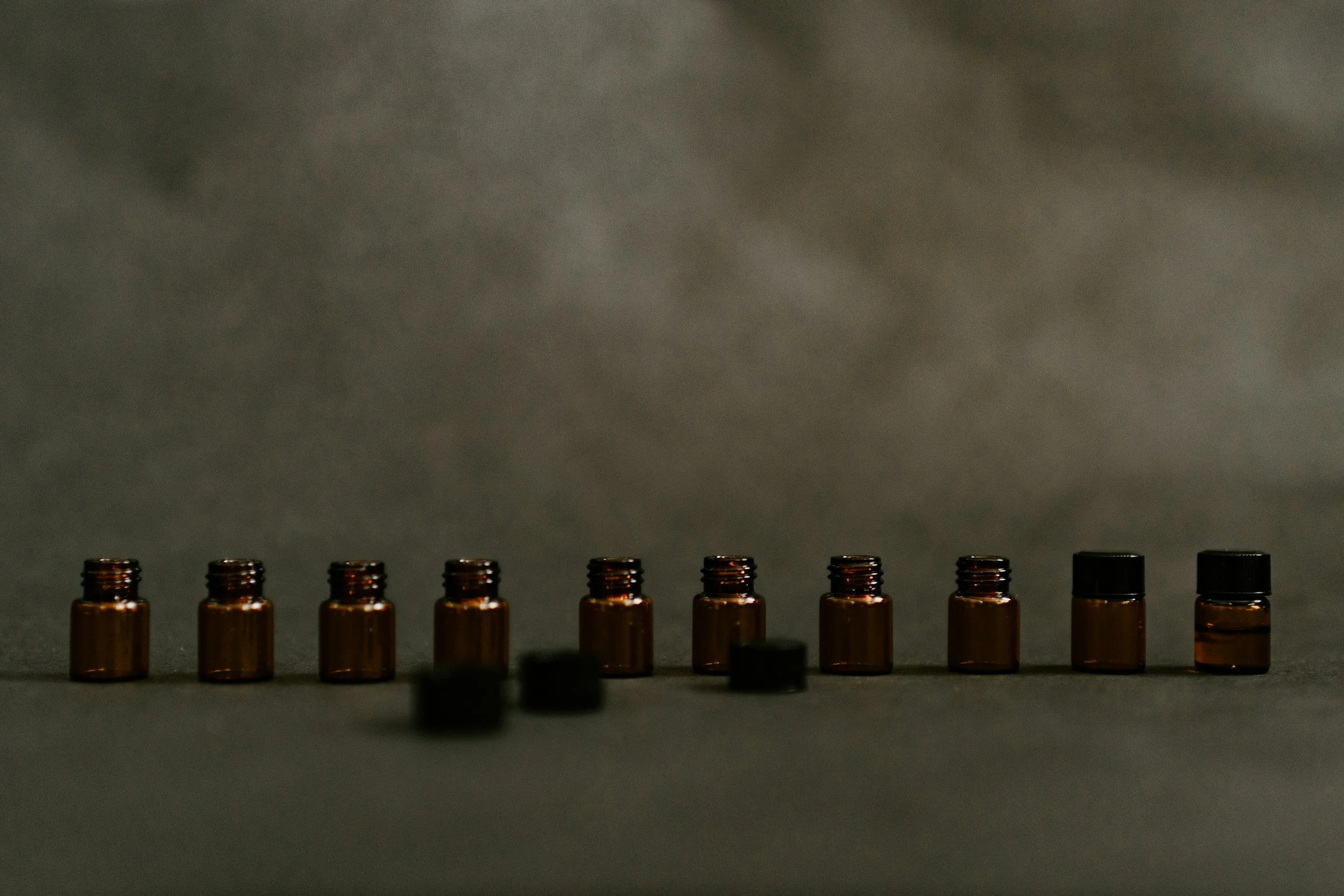
A return to wisdom, restraint, and respect. This post is part of an ongoing series on thoughtful, skin-supportive herbalism and formulation.
For the last decade, essential oils have occupied an unusual and often contradictory place in modern wellness. They have been praised as miracle cures, dismissed as dangerous irritants, marketed as lifestyle necessities, and feared as endocrine disruptors — sometimes all at once. The result is widespread confusion.
Some people avoid essential oils entirely, convinced they are inherently harmful. Others apply them neat, daily, and liberally across large areas of skin. Neither extreme reflects how essential oils were historically used, nor how they function best within the body — particularly when it comes to the skin.
This article is not an argument for or against essential oils. It is an invitation to understand them. Because essential oils are neither villains nor saviors. They are powerful plant concentrates that require context, restraint, and respect.
What essential oils actually are
Essential oils are highly concentrated, volatile aromatic compounds extracted from plants, most often through steam distillation. They represent only a narrow fraction of a plant’s chemistry — primarily the aromatic, lipid-soluble compounds that evaporate easily and interact rapidly with the nervous system, microbes, and tissues.
To put their concentration into perspective, it can take fifty to seventy-five pounds of lavender flowers to produce a single pound of essential oil. One drop of peppermint essential oil may contain the aromatic equivalent of dozens of cups of peppermint tea. Many essential oils contain compounds the body processes more like pharmacologically active substances than nutrients.
This matters — because concentration changes function. Essential oils are not “the plant in a bottle.” They are a distillate, not a whole.
A brief history of essential oils — and what is often misunderstood
Essential oils did exist in the ancient world, but not in the way they are commonly imagined today.
Historically, aromatic and medicinal plant use most often took the form of infused oils and unguents, aromatic fumigation through the burning of resins and woods, hydrosols and aromatic waters, wine or vinegar macerations, poultices, compresses, and baths.
True steam-distilled essential oils required specialized equipment, technical knowledge, and significant fuel. While early forms of distillation existed — particularly in Persia and later during the Islamic Golden Age — essential oils were rare, precious, and medicinal, not casual or commonplace. They were typically used in very small amounts, for specific purposes, often under the guidance of trained physicians or herbalists, and more commonly inhaled or diffused than applied directly to the skin.
What was widely used across cultures and centuries were whole plants, resins, infused fats, animal tallow, waxes, and aromatic waters.
the wisdom of traditional, whole-plant skincare
The modern idea that essential oils were used daily, topically, and liberally across the body is largely a myth — shaped more by modern technology and marketing than by historical precedent.
How modern use became distorted
Essential oils did not become controversial because they suddenly changed. Their context did.
Industrial distillation made oils inexpensive and widely accessible. Multi-level marketing framed them as cure-alls. Wellness culture equated “natural” with limitless safety. Social media rewarded dramatic claims over nuance. As a result, essential oils became daily skincare ingredients rather than occasional tools, self-prescribed medicine rather than targeted support, and were often applied neat or at high concentrations without consideration for tissue tolerance or cumulative exposure.
At the same time, backlash grew just as intensely in the opposite direction, labeling essential oils as inherently dangerous or hormonally disruptive without adequate context, dose consideration, or differentiation between oils.
Both extremes miss the truth.
How essential oils actually interact with the body
Essential oils are lipophilic, volatile, and highly bioactive. They readily cross the skin barrier, cellular membranes, and even the blood–brain barrier.
This is why they can be effective — and why misuse can cause problems.
On the skin, essential oils tend to stimulate circulation, increase permeability, activate nerve endings, and provoke immune responses. In the nervous system, they can rapidly shift mood, influence stress hormones, and activate memory and emotion.
These are not neutral or gentle actions. They are powerful ones.
Where essential oils shine — and where they struggle
Essential oils are best used strategically, not habitually. They shine in acute situations, aromatic use, targeted antimicrobial support, emotional and nervous system care, and brief, intentional topical applications.
Used this way, essential oils can be remarkable allies.
Problems tend to arise in skincare when essential oils are used daily in leave-on products, formulated at unnecessarily high percentages, applied to compromised or reactive skin, chosen primarily for scent rather than function, or used without sufficient fat buffers. Common outcomes include sensitization over time, barrier disruption, increased inflammation, and reactive or “mysterious” skin flare-ups.
This does not mean essential oils are bad for skin. It means they are not neutral.
Skin healing often requires stability, consistency, barrier repair, and low stimulation. Essential oils are activators. Healing skin often needs builders.
A return to respect and restraint
Respecting essential oils means understanding that more is not better, choosing oils intentionally rather than habitually, using dilutions far lower than modern norms often suggest, giving skin regular breaks from stimulation, and prioritizing whole-plant preparations whenever possible.
It also means being honest: not every formulation needs an essential oil, and not every scent needs to come from volatility.
That realization often marks a turning point in formulation maturity.
Why this conversation matters now
As more people struggle with sensitive skin, barrier damage, autoimmune conditions, and nervous system dysregulation, the demand for less stimulating and more restorative skincare continues to grow.
Essential oils still belong — but not everywhere, not always, and not as the centerpiece of every formulation.
Which naturally leads us to what many cultures relied on long before essential oils took center stage: resins.
In the next part of the series, we’ll look more closely at resins — why they were so widely used, and why they are returning to thoughtful formulation today.